

For months, I was searching for something I couldn’t find.
I looked for relief in anything that was supposed to make me feel better: comforting words that brought validation, journaling to provide a release, a ‘simpler’ self-care routine, and the promise we’re told about time, hoping that the faster it passes, the more back to ourselves we’ll feel.
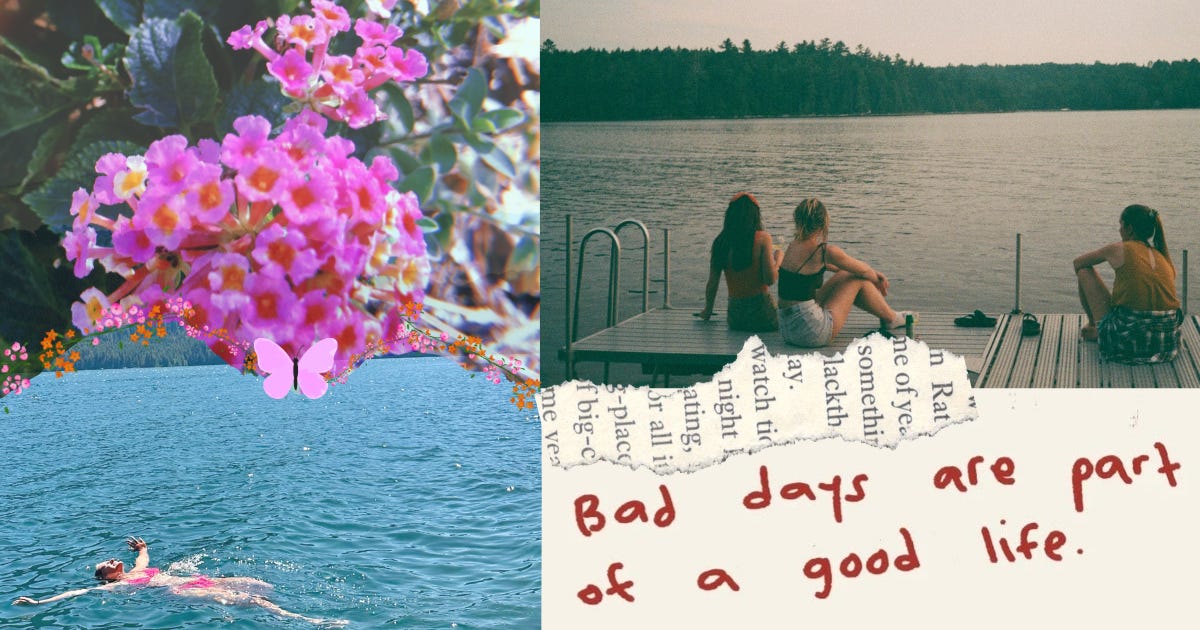
Healing isn’t dependent on any single thing, except knowing it doesn’t happen all at once.
If anything, it comes scattered in fragments. It shows up in the moments when we’re unapologetically ourselves, and it silently reveals itself in the ways we’ve changed because of what we went through. Not when we rush or force things to be different, or when we set unrealistic expectations about what healing the innermost parts of us is “supposed to look like.”
When we go through one life-altering moment after another without even having time to recover from the first, we start to feel like we’re on autopilot.
Our central nervous system becomes heightened. We feel fear over faith and worry instead of trust. Not because we want to, but because our bodies look for patterns. It remembers, and before we realize it we’re subconsciously preparing ourselves for what’s next before we had time to process what already happened.
Two months before my mom went into respiratory arrest this past December, I wrote this in my journal:
“I’ve had a lot of heavy emotions lately and feel lost in the expectations of where I ‘think’ I should be. I’m a person who just tries to keep pushing forward, without giving myself a break to process how I’m feeling or make sense of it all.”
My grief felt layered last year, and while half the time I let myself feel it, there was another part of me that felt behind because of it. It’s almost as if there was failure attached to grieving itself, especially admitting that I wasn’t where I thought I should be.

The problem with continually pushing ourselves in a season that only asks us to be still is we start thinking that we aren’t healing properly if we aren’t moving on in a specific time frame. As if there’s some sort of list that we have to properly check off each box, and if we don’t, then we’re convinced it must be because we’re falling short or not moving on ‘fast enough’.
The day after everything happened with my mom, there was a lot that shifted within myself. When you’re faced with the reality that any given moment could change the course of your life forever, it makes you realize that nothing matters except the few things that matter a lot.
We aren’t meant to live constantly on edge, as if we’re only waiting for what life might throw at us next. The irony of me writing about how I was forcing myself to move forward is that I had no idea how much my strength would need to carry me in the months ahead.
Even though there were days when it felt like one heavy brick kept piling on top of another, I learned the only way to lessen the weight was to lift them off one by one. Readjusting and rebuilding took time, and these were the simple, gentle ways that helped me discover the person I was becoming and shifting into through it all:
1. Focus on one thing, not everything
Burnout happens when we push past our limit without taking a second to catch our breath. When you mix that in with a season that you’re simply trying to get through, you quickly realize you can’t force yourself to do everything like you used to.
A question I kept coming back to was, “what will help me feel the best mentally?” I found that it wasn’t overloading my schedule from the second I woke up to when I went to sleep, but lessening expectations even in smaller increments.
Maybe this looks like making your bed when you first wake up, drinking more water, or working out for 20 minutes instead of an hour (because we’re not only productive when we push ourselves as much as we can). You don’t have to focus on everything, but one thing that’ll ground you and bring you closer to feeling better mentally.
2. Rest, rest and more rest
Rest doesn’t only come in the form of getting a full night of sleep. It can look like cancelled plans, saying “no” without guilt, and putting your mental health first if you aren’t okay with something or ready for it like you thought you were.
I love the quote: “Take a break before your body takes it for you”. While I’m a person who needs to recharge their battery rather quickly (even when I’m not going through a hard season), it’s a reminder to pause before the point of burnout.
Adding more to your plate only intensifies unnecessary stress, and it’s important to make relaxing a priority without the pressure of always doing more.
3. Reconnect with a more carefree version of yourself
A helpful distraction I’ve found for dealing with burnout is re-watching old comfort TV shows and movies, listening to music that brings me back to simpler times, and even reading books that I used to love. Reconnecting with a more carefree version of who we are reminds us that even when we’re in a hard season, it doesn’t mean things will always be this way.
Some of the shows/music that brought me comfort were: Full House, Legally Blonde, Parent Trap, Sex and the City, Degrassi (and anything with Tim Allen!!). There’s something so comforting about watching something that makes us laugh or reminds us of the good memories from our past.
4. Be aware of your triggers and set boundaries
The only person who knows what’s best for your mental health is you. When we’re caught in the back-and-forth cycle between survival mode and burnout, we naturally dismiss boundaries or overlook what triggers us because we’re already carrying so much as it is.
But when we say yes to the things we want to say no to, we only create more problems than what we started with. I look back on situations I agreed with just to keep the peace, and realized how it only ended up hurting me even more in the end.
It’s okay to take a break from anything that triggers or drains your energy by setting firm boundaries. I’ve been stepping away from social media more and more (I know, ironic with pursuing online writing), but I know it was harming me more than helping. Never feel guilty for protecting your mental health, even if it means temporarily disconnecting from people, places, or things.
5. Give yourself patience, even when it feels like you’re taking a step backward
I’m not out of the woods in my own healing journey, and I often have to remind myself that it’s not a race. While there are still pieces I’m trying to connect and make sense of, one of my biggest takeaways has been learning how to be patient with myself throughout the process.
On the days you only have 10 percent to give, and you still give that full 10 percent, it’s just enough as the days you’re operating at 100. Even if you have a hard day mentally, notice your small wins: facing the day even when you want to do the opposite, crying instead of holding it all in, or even writing out your emotions without holding back.
Healing isn’t one big breakthrough. It’s found in surviving the moments you thought you couldn’t, showing up when it feels impossible and giving yourself grace when it feels like you’re taking a step backward instead of forward. Especially when you find a deep reassurance knowing you won’t feel this way forever.

Thank you so much for reading! Be sure to check out more of my work at Truth Within Silence and follow along on Instagram.
